
The Surprising Origins of Tarot Mythology (Part 2)
Jan 11,2022 | 魔法塔羅的朋友們
Even the earliest known tarot cards were not designed with mysticism in mind; they were actually used to play games similar to modern bridge. Wealthy Italian families commissioned artists to create expensive decks known as carte da trionfi, or cards of triumph. These cards were marked with Cups, Swords, Coins, and polo mallets (which later evolved into the Suit of Wands (Fire Element)), along with a court made up of a King and two attendants. The Queen card was later added to this system, along with the trump cards (the wild cards unique to tarot) and The Fool, totaling a complete set of 78 cards. Today, people usually call this set the Minor Arcana, and refer to the trump card group within it as the Major Arcana.
Graphic design artist Bill Wolf developed a strong interest in tarot card illustration while studying at Cooper Union, an art school in New York, and he has his own theory about the origins of tarot. Wolf does not use tarot cards for divination; he believes that originally "the meaning of the images and the mechanics of the game were parallel. The random draw created a brand-new, unique narrative each time the game was played, and the decisions made by the players influenced how the narrative unfolded." Imagine those adventure-style card games where you choose for yourself.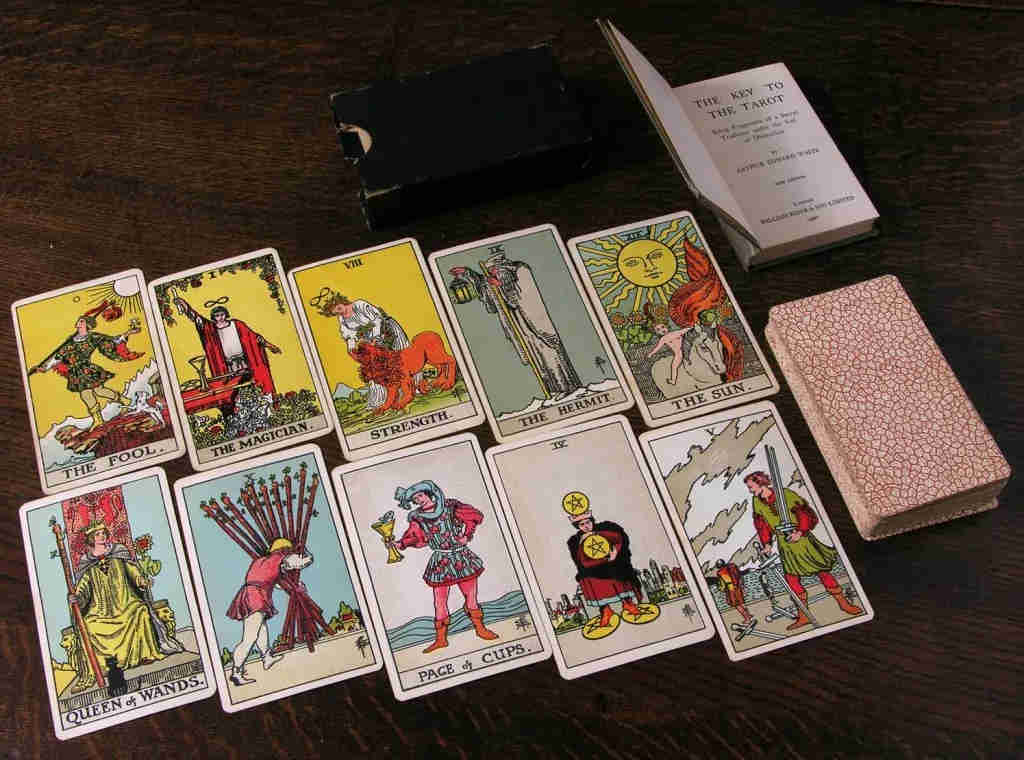
"These images were designed to reflect important aspects of players' real lives, and the prominent Christian symbolism within them is an obvious mirror of their Christian world," he adds. As divination became popular, the evolution of the imagery reflected the intentions of the designers. "The meanings of the images became increasingly esoteric," Wolf says, "but they essentially maintained the traditional structure of the four suits of the minor cards 'similar in number to the cards in an ordinary card game,' the corresponding Court Cards, and the major arcana with The Fool card included."
Even if you are not familiar with tarot reading, you have very likely seen one of the most popular decks, the famous Rider-Waite-Smith Tarot Deck, which has been continuously printed and published since 1909. It is named after its publisher William Rider and the well-known occult scholar A.E. Waite, who commissioned Pamela Colman Smith to create the imagery. This deck helped spark the rise of tarot mysticism in the 20th century.
"The Rider-Waite-Smith Tarot Deck was designed for divination, and Waite wrote a book to explain the esoteric meanings behind most of its imagery," Wolf says. "People feel that its revolutionary genius lies in the minor cards being 'illustrated'—that is, Colman Smith integrated the numbers of the suit symbols into small scenes on the cards, letting them tell stories within the pictures. This powerful narrative element gives readers something they can interpret, and when these cards are connected together, you can intuitively read your own story from them."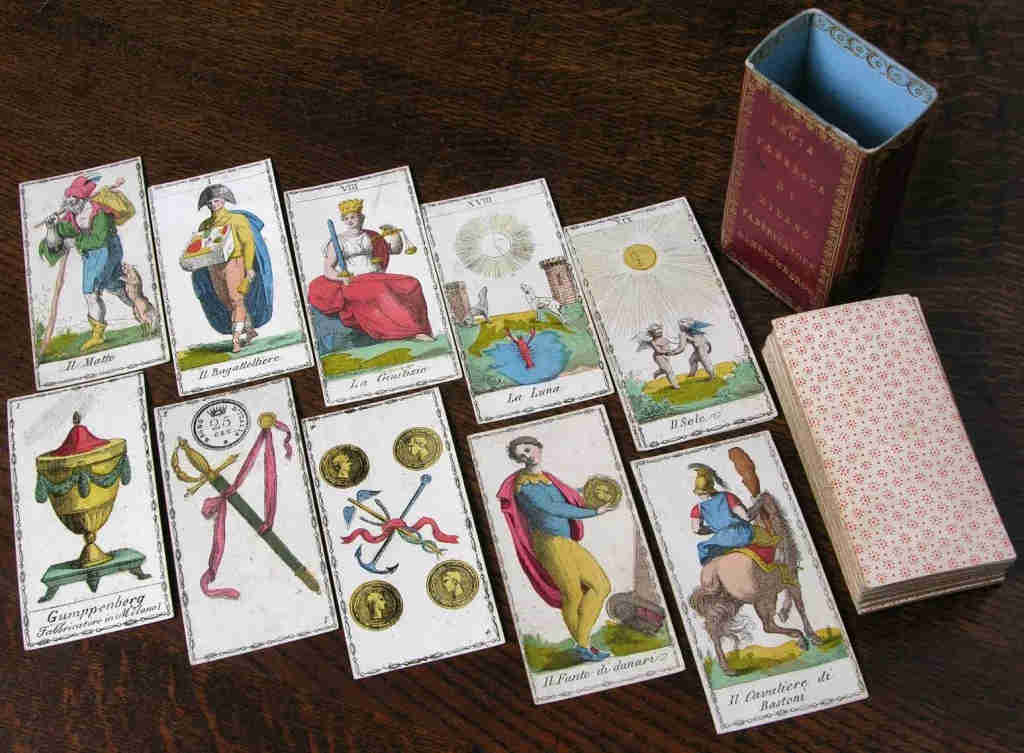
Comment
11 classic spreads with instant upright & reversed love, career, and clarity readings.
Searchable guide to Major & Minor Arcana symbolism, keywords, and crystal pairings.
Instant visual chakra map and mindful crystal suggestions — no email required.
Handpicked quartz bracelets, orgone pyramids, and altar supplies for daily rituals.