The Mystical Origins of Tarot Cards (Part 1): Ancient Egypt
Jan 09,2022 | 魔法塔羅的朋友們
There are many legends about the Tarot, and opinions have differed since ancient times. For a long time, ancient Egypt has been regarded by most people as the source of esoteric magic, and deep within the pyramids there are said to be hidden chambers where the mysteries originated; the great mages of Atlantis, when that continent sank beneath the sea, preserved their wisdom forever through the Tarot; the wise women physicians, full of knowledge, knew they had to hide the teachings passed down for thousands of years in order to escape being burned at the stake by religious authorities; the priests of the Jewish mystics immersed in the Tree of Life; the fortune-tellers of the Romani; the mages of Morocco……all these various legends are regarded as the origins of the Tarot.
But many people also feel that the Tarot is merely a pastime game, once only a form of court entertainment for European nobility, with no other practical meaning.
So where exactly did the Tarot originate? And why has it been able to endure step by step to this day?
The Tarot and Ancient Egypt
From today's perspective, the mystical nature of the Tarot has only been widely spread over the past two hundred years or so. Yet in such a short time, so many legends have grown around these cards. Part of the reason for this phenomenon is that everyone only knows it once appeared as a card game, but no one knows its exact origin; part of it is because the mysterious patterns on the Tarot and the esoteric stories created around them make people curious; and part of it is because some people wish to support the Tarot's esoteric claims and its power to reveal the future.
Such an object full of esoteric wisdom and power could not possibly have been born merely as a card game in the past one or two hundred years—behind it there must be some mysterious culture.
One theory widely accepted by many is that it originated in ancient Egypt. This was also proposed by the first Tarot mystics and has taken deep root in people's minds. In the eyes of Westerners, ancient Egypt has always held a very special place. The two great sources of European culture, ancient Greece and the Hebrews, both regarded Egypt as a wondrous land possessing great knowledge, profound mysteries, and magic.
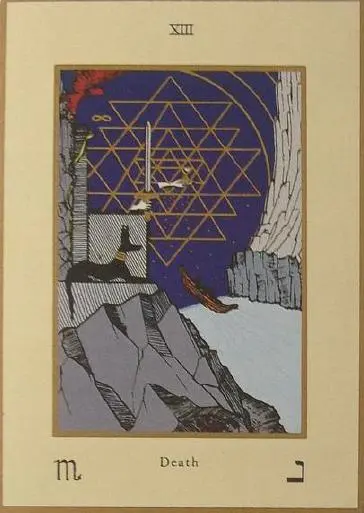
The two legends linking the Tarot with Egypt, in a certain sense, have no exact credibility. The first legend comes from the earliest Tarot mystic, Antoine Court de Gébelin, who described the Tarot as a "Book of All Knowledge," created by the mages of ancient Egypt to secretly teach disciples without the danger of being discovered by outsiders.
The second legend holds that a series of images was used to initiate disciples into understanding the knowledge of the gods. Recall that in the Tarot there are twenty-two Major Arcana cards. It is said that there was once a hidden chamber in an Egyptian temple, with eleven images arranged on each side, and disciples, after training, would enter this chamber. As they passed by these images, the images would imprint themselves upon the mind, and when they reached the end, they would find that they had undergone a transformation.
But neither of these legends has any real evidence. The concept of "the Book of All Knowledge of mysterious Egypt" was also something Court de Gébelin meditated upon after seeing someone's Tarot card game.
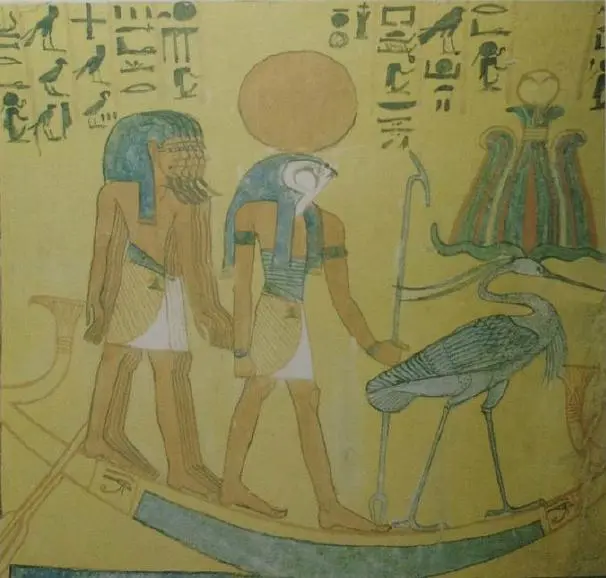
And the "secret temple theory" came from a nineteenth-century French mystic scholar named Paul Christian. He once published a novel, claiming it was translated directly from the work of the fourth-century writer Iamblichus. Borrowing Iamblichus's name, Christian described how initiates climbed seventy-eight steps to enter a great temple displaying twenty-two paintings, each containing sacred truth, wisdom, and the truths of the physical world.
The Major Arcana in the Tarot has twenty-two cards, while the entire deck has seventy-eight cards. These numbers easily lead people to closely associate ancient Egypt with the Tarot, and in turn to believe that the Tarot originated in ancient Egypt.
Paul Christian's story spread widely among theories about the origin of the Tarot and became deeply entrenched. To this day, many books still cite this "secret temple" and Iamblichus's description of it—as if they truly existed.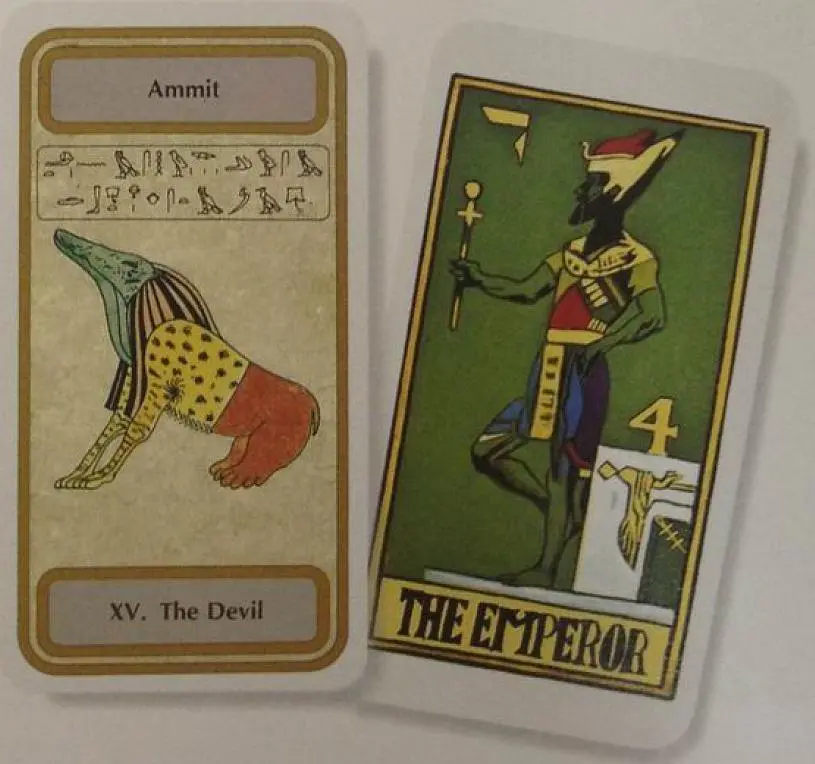
Comment
11 classic spreads with instant upright & reversed love, career, and clarity readings.
Searchable guide to Major & Minor Arcana symbolism, keywords, and crystal pairings.
Instant visual chakra map and mindful crystal suggestions — no email required.
Handpicked quartz bracelets, orgone pyramids, and altar supplies for daily rituals.