
Red Agate | A Splendid Hue of Auspiciousness
Oct 03,2024 | 魔法塔羅的朋友們
Red Agate has been treasured in people's hearts since ancient times, symbolizing good fortune, happiness, and beauty. This vivid shade of red—whether worn as an ornament or regarded as a protective amulet—has long been cherished by people everywhere.
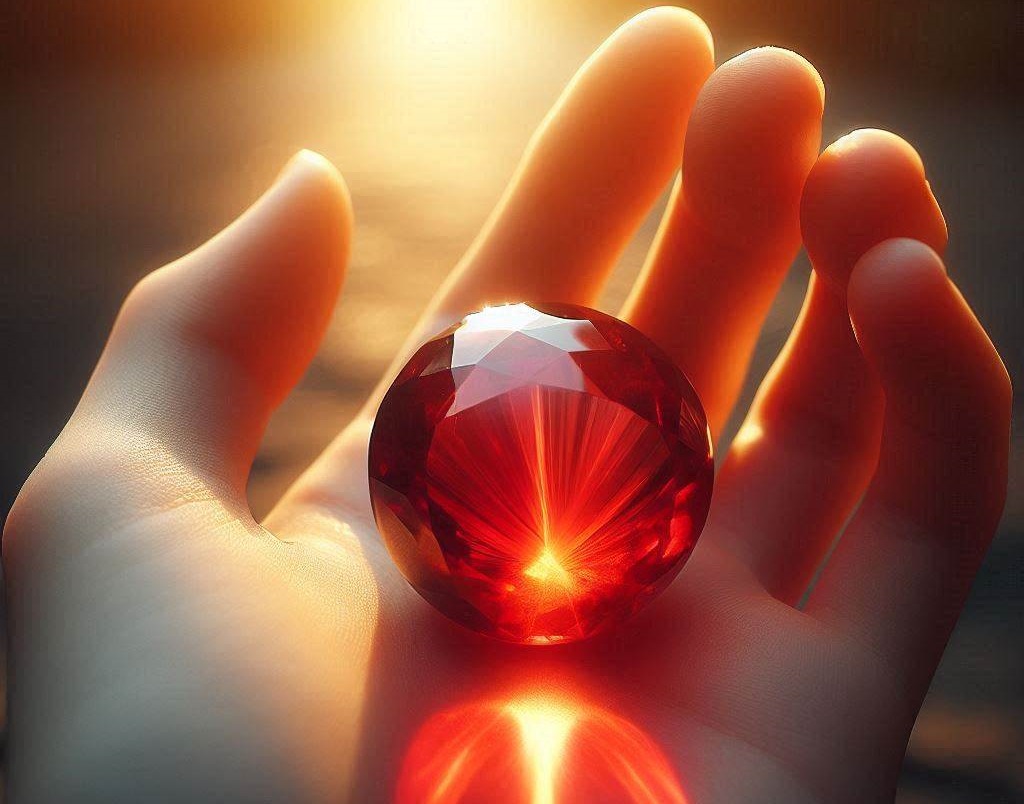
Red Agate, as the name suggests, is red agate. It belongs to the silicate minerals—essentially a variety of quartz—and shares many of the same properties as quartz. In mineralogy, Red Agate is also classified as a variety of chalcedony and is an important member of the crystal family. Its six-sided crystalline structure is extremely fine, visible only under a microscope.
Red Agate comes in many varieties. Depending on its source and how it is processed, it can be divided into Eastern Red Agate and Western Red Agate. Eastern Red Agate refers to natural iron-bearing agate that has been heat-treated to produce a red color, also known as "burnt red agate," and includes bright red and orange-red tones. This type gets its name from its early origins in Japan. Western Red Agate refers to natural red agate, which includes both deep red and vivid red tones. Most of the agate unearthed in ancient China belongs to the Western Red Agate category; these stones mostly came from the West, hence the name.
When Red Agate has a fine banded structure, it is classified as a type of banded agate.
Since ancient times, Red Agate has been a symbol of good fortune and is regarded as the "Third Eye" among gemstones. It symbolizes a friendly and loving heart and also represents hope. In the West, Red Agate is called the "Stone of Happiness," symbolizing marital harmony and affection, and is said to help harmonize the emotional bond between you and your loved one.
Beyond its symbolic meaning, Red Agate is also traditionally associated with a variety of benefits. It is said to help balance the body's energy, ease mental tension and stress, and support harmony between body and mind. Red Agate is also believed to inspire courage and foster confidence and decisiveness, making it a fitting companion for those who are frail, frequently unwell, or recently recovered.
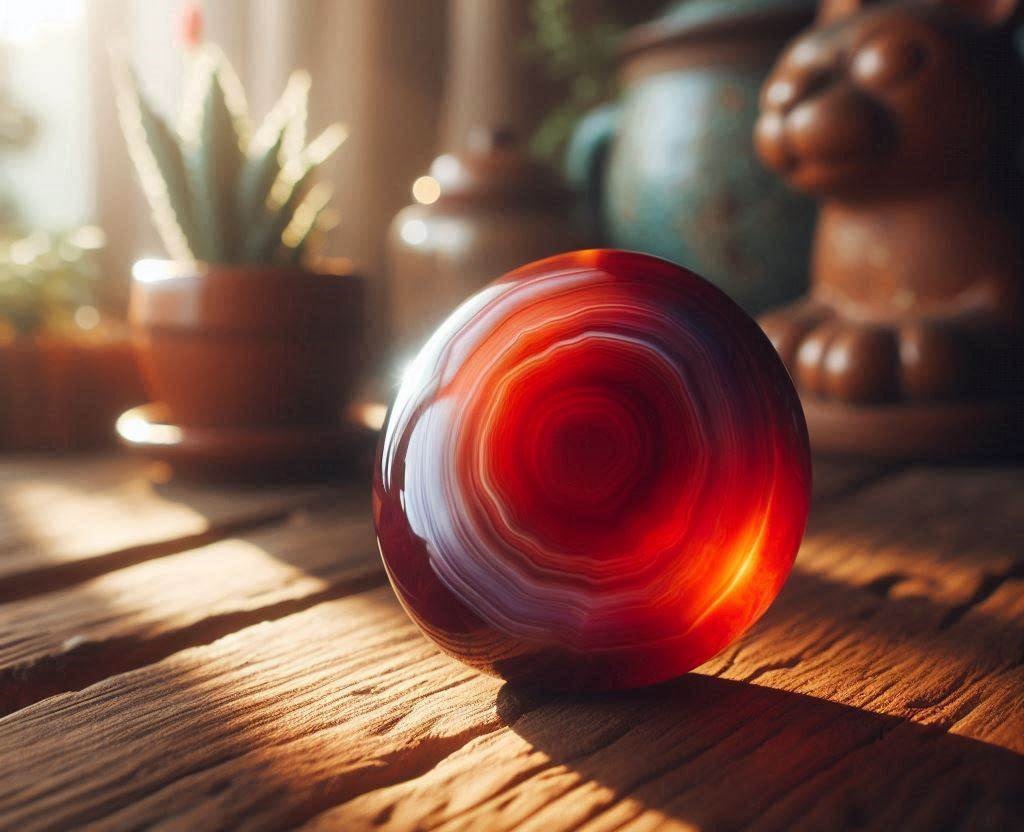
With such a dazzling array of Red Agate products on the market, how can you tell the genuine from the fake?
-
Color: Natural Red Agate has a pure, natural color with organic transitions. Genuine pieces show clear color bands under light, while fake Red Agate tends to look dull and stiff, with a forced appearance.
-
Texture: Fake Red Agate is usually imitation stone, which is relatively soft—you can scratch a fake piece with jade, but not a genuine one. On the surface, genuine Red Agate rarely shows flaws, while inferior pieces tend to have many.
-
Transparency: Genuine Red Agate is not highly transparent; some pieces show natural water lines or "cloud" and "silk" patterns. Synthetic Red Agate, by contrast, is highly transparent—as clear as a glass marble—and often looks unnatural.
-
Craftsmanship: High-quality Red Agate is produced with strict, advanced techniques, so its surface is highly polished, its settings are secure and well-aligned, and it is free of scratches and cracks.
Although Red Agate is associated with many benefits, there are a few precautions to keep in mind when wearing it:
-
Avoid impacts: Red Agate is not very hard, so take care not to strike it forcefully while wearing it, and avoid knocking it against other hard objects. Store it separately to prevent damage.
-
Regular care: When wearing a Red Agate bracelet, maintain it regularly. You can soak the bracelet in a basin of clean water for a while, then use a soft brush to remove any impurities, keeping it clean and strengthening your connection with it.
-
Avoid high heat: When not wearing your Red Agate bracelet, keep it away from high temperatures, as exposure to heat can cause expansion that damages the agate and affects its value and properties.
-
Avoid chemicals: Red Agate is composed mainly of natural minerals and trace elements, so avoid contact with chemicals while wearing it. Certain chemical ingredients can react with the substances in Red Agate and may cause corrosion.
-
Pregnant women should take care: From a feng shui perspective, Red Agate is considered a yin-energy stone, and pregnant women are generally advised not to wear it, as it may increase dampness in the body and gradually weaken their constitution.
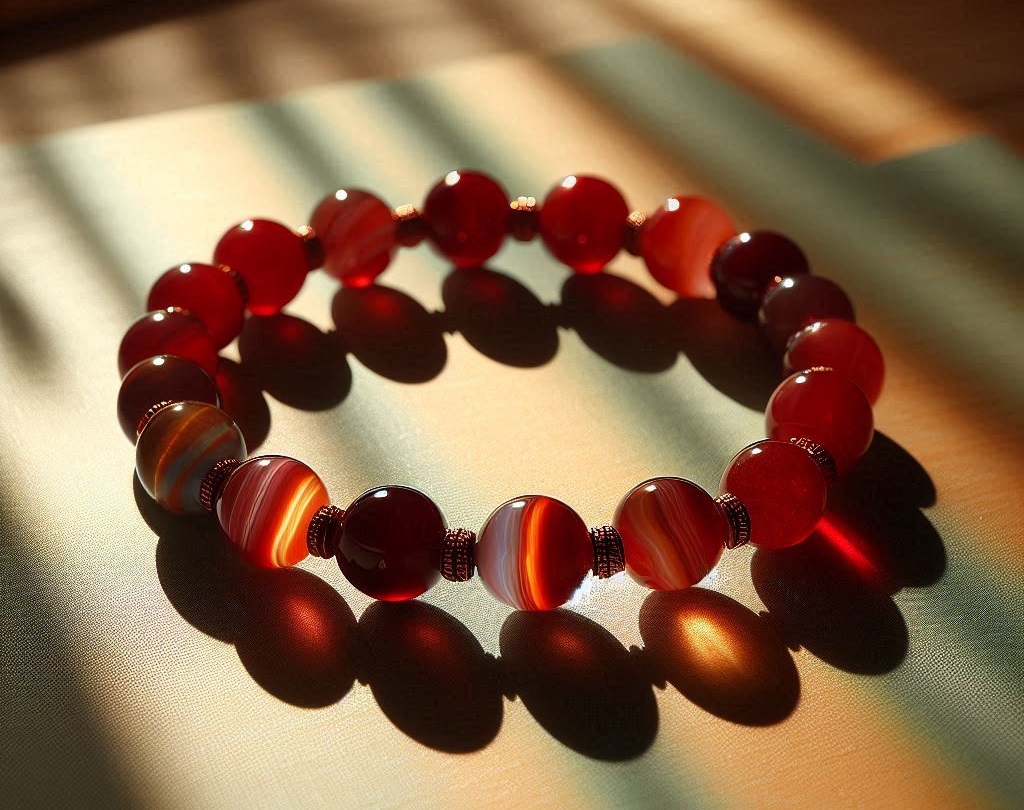
Red Agate—this vivid shade of red—whether worn as an ornament or regarded as a protective amulet, is deeply cherished by people. It symbolizes good fortune, happiness, and beauty, adding boundless joy and hope to daily life. Let us treasure this gift of nature together, letting it shine in our lives and bring us more happiness and beauty.
Comment
11 classic spreads with instant upright & reversed love, career, and clarity readings.
Searchable guide to Major & Minor Arcana symbolism, keywords, and crystal pairings.
Instant visual chakra map and mindful crystal suggestions — no email required.
Handpicked quartz bracelets, orgone pyramids, and altar supplies for daily rituals.