What Is Tarot - MofaTarot
Aug 20,2020 | 魔法塔羅
What Is Tarot?
Tarot, transliterated from the word "TAROT," has been called "the treasure house of nature's mysteries." It is an ancient Western divination tool that has been popular in Europe since the Middle Ages, and its origins remain a mystery.
Tarot is widely recognized within the tarot community as a way to analyze and forecast people, events, and situations while offering corresponding guidance.
Tarot can be used for readings on a wide range of questions—relationships, work, studies, love, and more—and some scholars also incorporate tarot into psychological counseling. In general, though, what people rely on most is tarot's analytical function.
A tarot deck contains seventy-eight cards in total: twenty-two Major Arcana cards and fifty-six Minor Arcana cards. They can be used separately for readings or all seventy-eight can be shuffled and used together. One thing to keep in mind: tarot is not limited to any single fixed deck. In fact, there are thousands of tarot decks, but most of them extend from three major tarot systems.
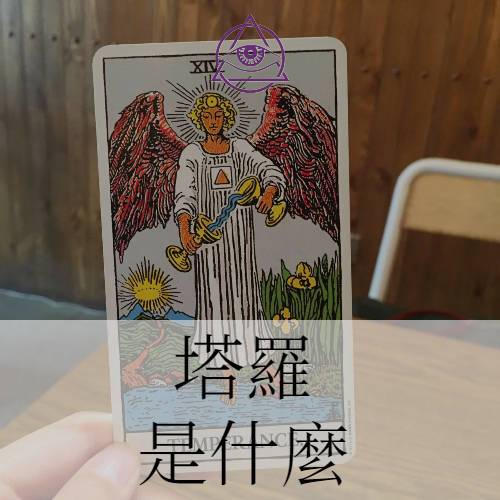
The Three Major Tarot Systems
These are the Tarot of Marseilles, the Rider-Waite-Smith Tarot Deck, and the Thoth Tarot (also known as the Aleister Crowley Thoth Tarot).
1. Tarot of Marseilles
The Tarot of Marseilles is a classic tarot deck that originated in Marseille, France. From the late fifteenth century onward, records show that large numbers of printed tarot decks were published there, and the seventy-eight-card standard tarot structure recognized today follows the Marseilles specification.
The Tarot of Marseilles has a simple, plain artistic style. Its Minor Arcana number cards are like playing cards—without story imagery, they simply depict the same number of suit symbols as the card's number. For example, the Four of Cups basically shows four cups, and the Four of Pentacles basically shows four pentacles to express its meaning. Although the Marseilles style is relatively simple, scholars remain deeply interested in studying it. The famous psychologist C.G. Jung believed that the Tarot of Marseilles contains symbols of humanity's psychic archetypes. In France, the Marseilles deck is said to be even more common than playing cards—though locally it is mainly used for card games, and it can be bought in ordinary shops.
2. Rider-Waite-Smith Tarot Deck
The Rider-Waite-Smith Tarot Deck was conceived and structured by Arthur Edward Waite (1857–1942), a well-known member of the Golden Dawn, and illustrated by Pamela Coleman Smith. Together they created this deck, which has had the deepest influence on later generations and is the most widely published tarot deck of all.
This deck was officially released in 1910, and its worldwide popularity comes down to three main reasons:
1. Unlike the Tarot of Marseilles, whose Minor Arcana number cards simply depict suit symbols, the Rider-Waite-Smith Minor Arcana number cards use concrete story imagery to convey the meaning of the Minor Arcana—easy to understand while still honoring esoteric depth.
2. Waite wrote a book explaining tarot principles and divination, and it was released together with the deck. This was the first time in history that a tarot deck came with an instruction manual, allowing buyers to study and use it on their own—a pioneering move that became standard practice for tarot publishing ever after.
3. The Rider-Waite-Smith Tarot Deck was released in 1910 with English text and imagery, and thanks to the strength of the British Empire at the time and the later rise of the United States, this best-selling deck in Britain gradually spread around the world.
To date, at least several hundred tarot decks have been designed under the influence of the Rider-Waite-Smith Tarot Deck, and more than seventy percent of English-language tarot books are written using it as the model. So if you were to choose one international standard deck from among the many tarot decks out there, the first choice is absolutely the Rider-Waite-Smith Tarot Deck.
3. Thoth Tarot
The Thoth Tarot was created by one of the most controversial modern occultists—Aleister Crowley (1875–1947)—in collaboration with Lady Frieda Harris. Over five years (1938–1943), they blended astrology, Kabbalah, the I Ching, mythology, alchemy, magic, and other esoteric elements to create this Egypt-themed tarot deck. Its art style is distinctive and abstractly beautiful, and its depth surpasses most tarot decks that came before it. Based on experience, most people who have used this deck feel that its spiritual-development function is greater than its divination function, so among those who use tarot for spiritual practice, the Thoth deck is arguably the most highly regarded.
The Structure of a Tarot Deck
Major Arcana
The Major Arcana cards, as the name suggests, are used to interpret the broad currents of destiny. Each card reflects a different circumstance in life, so when a Major Arcana card appears in a reading, it becomes a focal point of the analysis. The answers or messages it gives us concern the bigger questions or main situations at hand. At the same time, it offers us higher-level lessons in thinking. These lessons reveal answers to the important issues we face, helping us better choose our next step—rather than handing us a definite solution.
As for The Fool, it has no exact number among the twenty-two Major Arcana cards; sometimes people number it "0," and sometimes it is left unnumbered. Each of the twenty-two Major Arcana cards represents a certain virtue or experience, and only by integrating these virtues and experiences can we fully come to know ourselves and complete the growth of our inner world. This process of growth is called "The Fool's Journey."
[0] The Fool (0)
[1] The Magician (I)
[2] The High Priestess (II)
[3] The Empress (III)
[4] The Emperor (IV)
[5] The Hierophant (V)
[6] The Lovers (VI)
[7] The Chariot (VII)
[8] Strength (VIII)
[9] The Hermit (IX)
[10] Wheel of Fortune (X)
[11] Justice (XI)
[12] The Hanged Man (XII)
[13] Death (XIII)
[14] Temperance (XIV)
[15] The Devil (XV)
[16] The Tower (XVI)
[17] The Star (XVII)
[18] The Moon (XVIII)
[19] The Sun (XIX)
[20] Judgement (XX)
[21] The World (XXI)
Minor Arcana
The meanings of the four suits are as follows:
[Suit of Wands (Fire Element)] represents the element of fire, symbolizing passion, energy, and creativity.
[Suit of Pentacles (Earth Element)] represents the element of earth, symbolizing money, the material world, and enjoyment.
[Suit of Cups (Water Element)] represents the element of water, symbolizing emotion, relationships, love, and inspiration.
[Suit of Swords (Air Element)] represents the element of air, symbolizing thought, wisdom, communication, and conflict.
The Minor Arcana cards fill in what the Major Arcana cards do not cover—for when we want to know more about the truth of a situation or about another person's circumstances.
Among them, the figure cards made up of Page, Knight, Queen, and King are also called the Court Cards.
- MofaTarot
Further reading >>>
Comment
11 classic spreads with instant upright & reversed love, career, and clarity readings.
Searchable guide to Major & Minor Arcana symbolism, keywords, and crystal pairings.
Instant visual chakra map and mindful crystal suggestions — no email required.
Handpicked quartz bracelets, orgone pyramids, and altar supplies for daily rituals.