Introduction to Tarot Cards - MofaTarot
Jun 27,2018 | 魔法塔羅
What Is Tarot? How Do You Read It? How Do You Learn It?
The word "tarot" comes to us as a transliteration of "TAROT," and the cards have been called "a natural treasury of mysteries." Tarot is an ancient Western divination tool that has been popular in Europe since the Middle Ages, and its true, specific origins remain an unsolved mystery.
A tarot deck holds 78 cards in total: 22 Major Arcana and 56 Minor Arcana. You can read with each set on its own, or shuffle all 78 together for a Tarot Reading. It's worth noting that tarot isn't one fixed deck—in fact, there are countless varieties, at least a thousand or more, yet most of them are extensions built on the blueprint of the world's three major tarot systems.
The Principles of Reading Tarot
Before you begin a Tarot Reading, first make sure your body and mind are in a good, calm state. This matters a great deal: reading tarot is demanding work that calls for focused attention, and only with a clear mind can you understand the meaning the cards are presenting. Then carry out the following preparations.
1. Find a time when your mind is clear and your mood is calm.
2. Find a quiet place where you won't be disturbed—your own home, for example.
3. Have a tarot deck ready.
4. Prepare a table with enough space to lay out your Tarot Spread. A black Tarot Altar Cloth is recommended here, because—whether from a scientific or an intuitive standpoint—black is the color best able to gather light and energy.
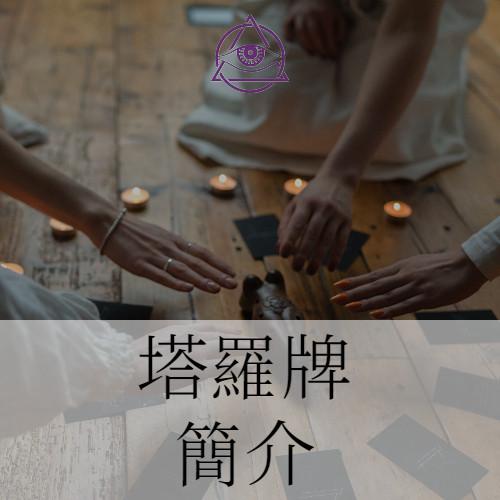
Next, confirm the question you want to ask and shuffle the cards. There are two different shuffling motions, and you repeat both each time you do a reading. After shuffling comes the Cut Card (Bottom of the Deck), which is performed by the querent. Once you've shuffled and stacked the cards face down in a pile, ask the querent to cut the deck. Shuffling and cutting are the steps most critical to the accuracy of the whole process. After the spread is laid out, turn over each card in order. Turn them from left to right, and once all the cards are revealed, it's time to interpret—this is the final step: opening the cards and reading them.
Interpreting the Tarot Cards
First, understand the foundational Tarot Card Meanings. Every tarot card has its own core meaning. No matter who you are or what country you're from, when you draw a given tarot card, its foundational meaning is the same—a set of keywords.
Second, expand on the card's meaning. Once you understand the foundational meaning, you can extend it further. These extended meanings are not entirely uniform; different tarot systems give the same card different extended meanings.
Third, interpret the card through your own associations. This layer of meaning arises as the reader combines the foundational meaning and the extended meanings with their own intuitive associations during a reading.
Fourth, interpret the card in light of the question being asked. The three points above form the theoretical foundation for reading, and only by connecting them to the question at hand and synthesizing all of it can you arrive at a final reading.
Fifth, keep a tarot journal consistently. A tarot journal helps readers improve effectively and quickly, and it deepens your understanding of the Tarot Card Meanings.
Sixth, seek feedback from the querent. You can ask whether what was read actually came to pass and how the timing played out. If the reading was inaccurate, what was the reason? This deepens your understanding of the cards.
Rituals Associated with Tarot
Ritual practice is an advanced form of working with tarot, often focused on people going through a breakup or heartbreak. Such rituals are intended to help two people who have separated find their way back to each other. They combine natural energies, focused intention, and traditional spoken and symbolic practices to help bring the person's personal energy into its best state—a spiritual approach to restoring a relationship. (Note: no outcome can be guaranteed; rituals are best understood as a form of mindfulness and symbolic reflection.)
Recommended Books for Learning Tarot
For learning tarot, the first recommendation is You Are Already Tarot by Paul Fenton-Smith. This book is widely regarded as one of the classic introductions and is essential reading for anyone learning tarot. Next is The Sunflower Treasury of Tarot by Sunflower, jointly recommended by Wang Zhonghe, director of the Eye of Life Body-Mind-Spirit Center, and Qingfeng, chief tarot instructor at the Daoist Academy. The third recommendation is The Wisdom of the 78 Degrees by Rachel Pollack. This book helped launch the contemporary "tarot revival" and is revered as the bible of tarot. Beyond these, there are A Detailed Guide to Tarot Reversed Cards, The Tarot Learning Bible, and more.
- MofaTarot
Further Reading >>>
Common Tarot Questions and Answers
Comment
11 classic spreads with instant upright & reversed love, career, and clarity readings.
Searchable guide to Major & Minor Arcana symbolism, keywords, and crystal pairings.
Instant visual chakra map and mindful crystal suggestions — no email required.
Handpicked quartz bracelets, orgone pyramids, and altar supplies for daily rituals.