
The Gemstone Encyclopedia • Essential Properties of Natural Healing Crystals & Gemstones
Jan 09,2022 | 魔法塔羅的朋友們
1. Crystal is an oxide gemstone. Its chemical composition is primarily silicon dioxide, with the chemical formula SiO2, meaning there are two oxygen atoms for every silicon atom.
2. Crystal belongs to the intermediate crystal class and the trigonal crystal system. Based on whether a crystal has a high-order axis and whether it has one or more high-order axes, the 32 symmetry types found in crystals are grouped into three crystal classes: low, intermediate, and high. Within each crystal class, crystals are further divided into seven crystal systems according to their symmetry characteristics: isometric, trigonal, tetragonal, hexagonal, monoclinic, triclinic, and orthorhombic. Because crystal has one threefold axis, it belongs to the intermediate crystal class and the trigonal crystal system.
3. Optical properties of crystal
According to experts, crystal is uniaxial and optically positive. Because crystal has one optic axis, it is called uniaxial. When a light wave enters perpendicular to the optic axis of a uniaxial crystal, the light undergoes double refraction and splits into two beams whose vibration directions are perpendicular to each other. At this point, one component of the light vibrates parallel to the optic axis, giving the refractive index of the extraordinary ray, while the other component vibrates perpendicular to the optic axis, with a refractive index equal to that of the ordinary ray. When the extraordinary refractive index is greater than the ordinary refractive index, the crystal is described as optically positive uniaxial; when the extraordinary refractive index is less than the ordinary refractive index, it is described as optically negative uniaxial. Crystal's extraordinary refractive index (1.553) is greater than its ordinary refractive index (1.544), so crystal's optical character is described as optically positive uniaxial.
Birefringence of crystal. Crystal's extraordinary refractive index is 1.553 and its ordinary refractive index is 1.544. The difference between the two, 0.009, is crystal's birefringence value.
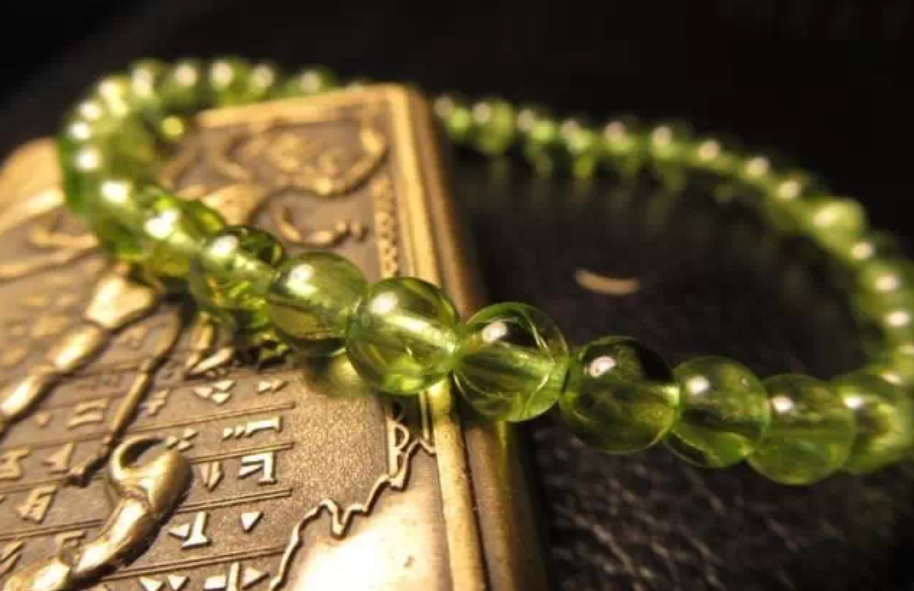
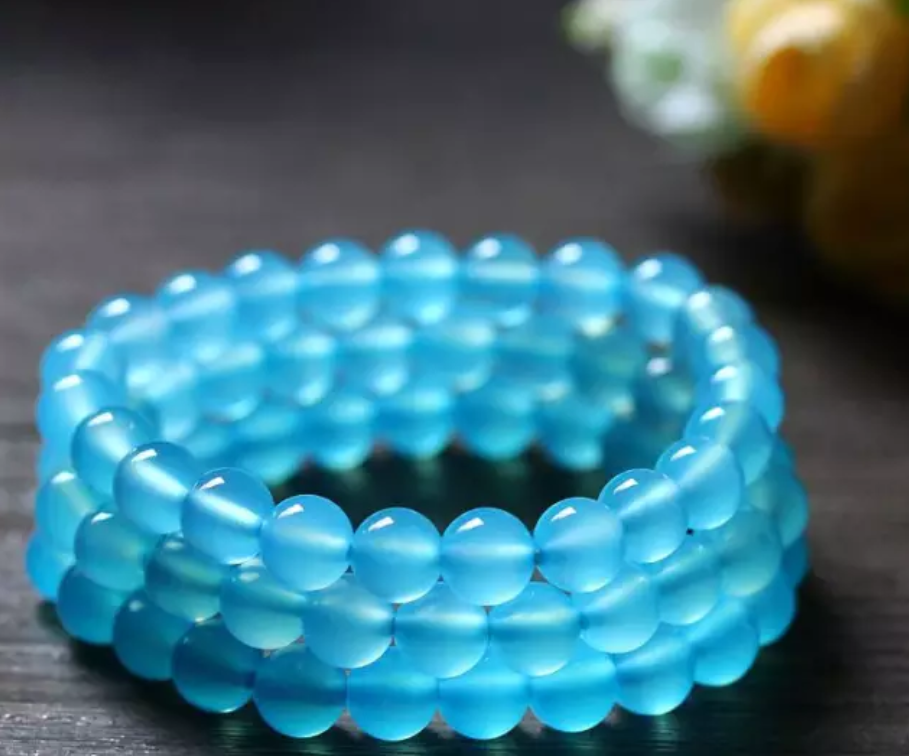
Crystal's color is allochromatic. The term allochromatic refers to color caused by trace elements in the chemical composition, or color caused by mechanical inclusions. A crystal whose chemical composition is pure silicon dioxide is colorless; with trace amounts of trivalent iron and divalent manganese it appears purple; with trace divalent iron it appears yellow; with trace iron it appears green; with trace divalent manganese and tetravalent titanium it appears pink; and with trace trivalent aluminum it appears smoky.
Crystal's luster is vitreous. Luster refers to the ability of a gem mineral's surface to reflect light. Based on the intensity of luster, it can be classified into metallic luster, submetallic luster, adamantine luster, vitreous luster, and so on.

Crystal's transparency ranges from transparent to semi-transparent. Transparency is the degree to which a gem mineral allows visible light to pass through. Gem mineral transparency is typically divided into five grades: transparent, sub-transparent, semi-transparent, sub-semi-transparent, and opaque.
Special optical effects of crystal. Through the effects of refraction, reflection, interference, and diffraction of light, some crystals can produce cat's eye effects, asterism effects, and rainbow effects, which are known as the special optical effects of crystal.
Cat's eye effect. On the surface of some cabochon-cut crystals, refraction and internal reflection of visible light produce a bright band of light resembling a cat's eye, known as the crystal cat's eye effect. As the light source or the cabochon crystal moves, the band of light also moves in parallel. A crystal capable of producing a cat's eye effect must contain a set of densely and directionally arranged inclusions or structures. In addition, the base plane of the cabochon crystal should be parallel to the plane in which the inclusions lie.
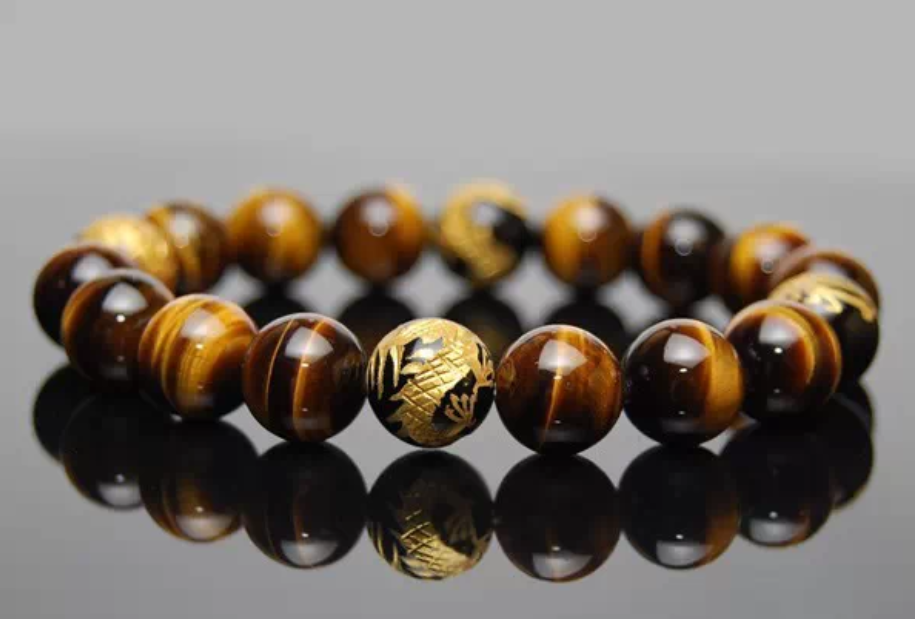
Asterism effect. On the surface of some cabochon-cut crystals, refraction and internal reflection of visible light produce a set of radiating, shimmering bright lines resembling stars twinkling in the night sky, known as the crystal asterism effect. A crystal capable of producing an asterism effect must contain two or more sets of directionally arranged inclusions or structures, and the base of the crystal must be parallel to the plane in which these inclusions or structures lie. Crystal asterism can be divided into three-ray, four-ray, six-ray asterism, and so on.
Rainbow effect. In gemology, this optical effect is called "play of color." It occurs when some crystals develop fissures due to geological processes; under natural light, the interference and diffraction of visible light by these fissures produce colors known as the crystal rainbow effect. In fact, any gemstone with fissures can produce a rainbow effect.
The special optical effects of crystal can help enhance its strengths and mask its weaknesses. For example, if a crystal is relatively large and contains a sizable internal fissure, this is obviously a major flaw; however, if the fissure can produce a rainbow effect and that effect is fairly pronounced, it becomes a favorable condition that enhances the crystal's ornamental value and also plays a positive role in increasing its economic value.
Comment
11 classic spreads with instant upright & reversed love, career, and clarity readings.
Searchable guide to Major & Minor Arcana symbolism, keywords, and crystal pairings.
Instant visual chakra map and mindful crystal suggestions — no email required.
Handpicked quartz bracelets, orgone pyramids, and altar supplies for daily rituals.