Preparing Your 7 Chakras Healing Stones Before Use
Settle yourself into a quiet, comfortable space, then attune and connect with your crystals in meditation. Let your heart become more open and receptive, and place your full trust and surrender into the Strength of the crystals. When the energy field of the crystals merges and exchanges with the human energy field, that mutual nourishment becomes a profound Strength—soothing our wounded emotions and bringing balance back to our energy state. When using them for the first time, you can begin with just 5 minutes of healing time. Gradually extend it to 20–30 minutes. You can place the stones one at a time, resting with each sensation for 2–3 minutes before adding the next. Keep in mind that throughout the healing process, your awareness should remain continuously focused, noticing every subtle shift in your body and emotions. After use, it's best to give your healing crystals a collective Crystal Cleansing & Energy Charging session so they can maintain their optimal working state.
How to Use the 7 Chakras Healing Stones
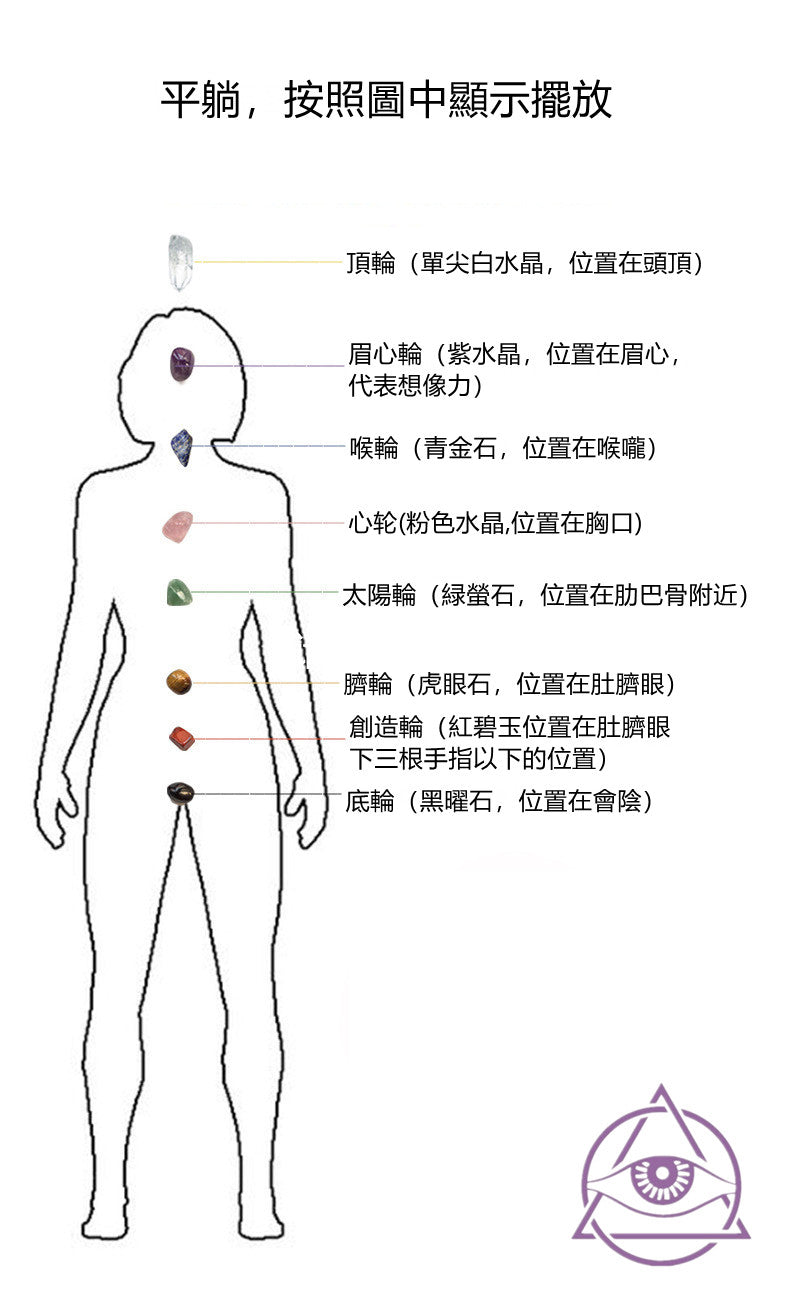
As shown in the image below, place the crystals on your body.
Notes on the 7 Chakras Healing Stones
If you have Palo Santo, White Sage (Smudge Bundle), Tibetan incense, or similar, you can light it before the healing begins to clear the entire space. If your 7 Chakras healing stone set includes a large piece of Rose Quartz and an Amethyst cluster, you can hold the Amethyst cluster in your left hand and the Rose Quartz in your right hand during the healing session. You can also place two crystals of the same color/material on the same chakra position to further enhance the healing effect. If the crystals you own don't match those shown in the image above, you can still do chakra healing. As long as you place them near the corresponding chakra positions, the energy field released by Natural Healing Crystals & Gemstones will still support your chakras.
How to Use the 7 Chakras Crystal Dowsing Pendulum
When testing, it's best to have another person help you with the reading.
Step 1: The person being tested lies face-up or face-down (chakras have front and back aspects, so you can test both the front and back of the body);
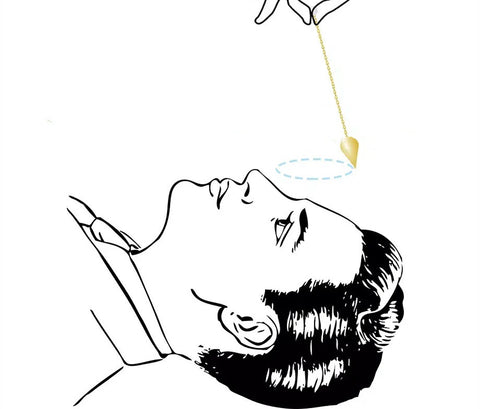
Step 2: The tester holds the Crystal Dowsing Pendulum directly above the recipient's chakra area, keeping the pendulum about 3–7 cm away from the body;
Step 3: The tester can use their other hand to support the elbow of the testing hand, stabilizing it. Keep the testing hand still, but don't grip the pendulum too tightly—give it room to move freely;
Step 4: Observe for a moment. Once the pendulum settles out of its initial inertia, it will begin to move in response to the chakra.
During the process, the chakra may change direction or pattern, because it needs to coordinate with the entire body's energy system. So observe for a while longer and see what its primary movement pattern is—is it moving in even circles? Or drawing straight lines? What are the speed and amplitude? Then draw your conclusion.
Based on the pendulum's movement pattern, we can interpret the chakra:
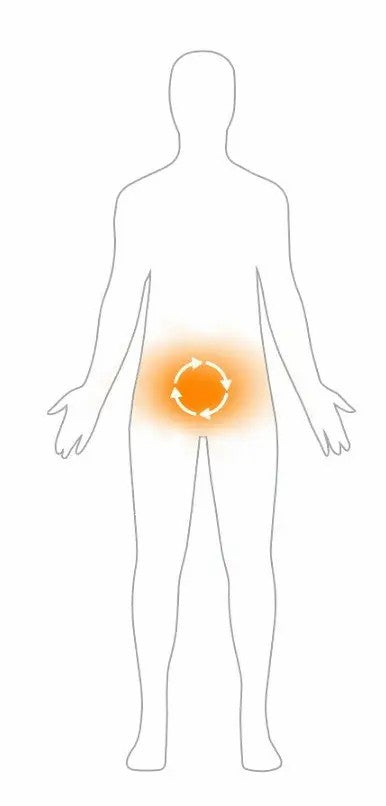
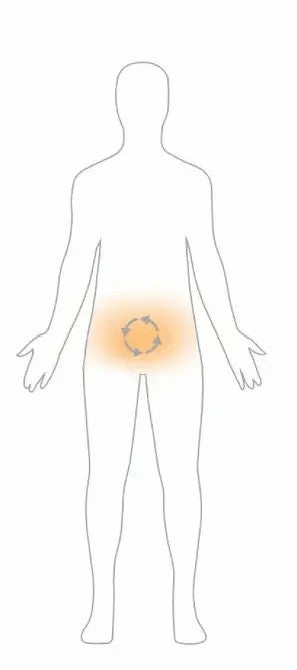
Pattern 01: Rotating in a clockwise circle—this indicates the chakra is in good condition, open and balanced.
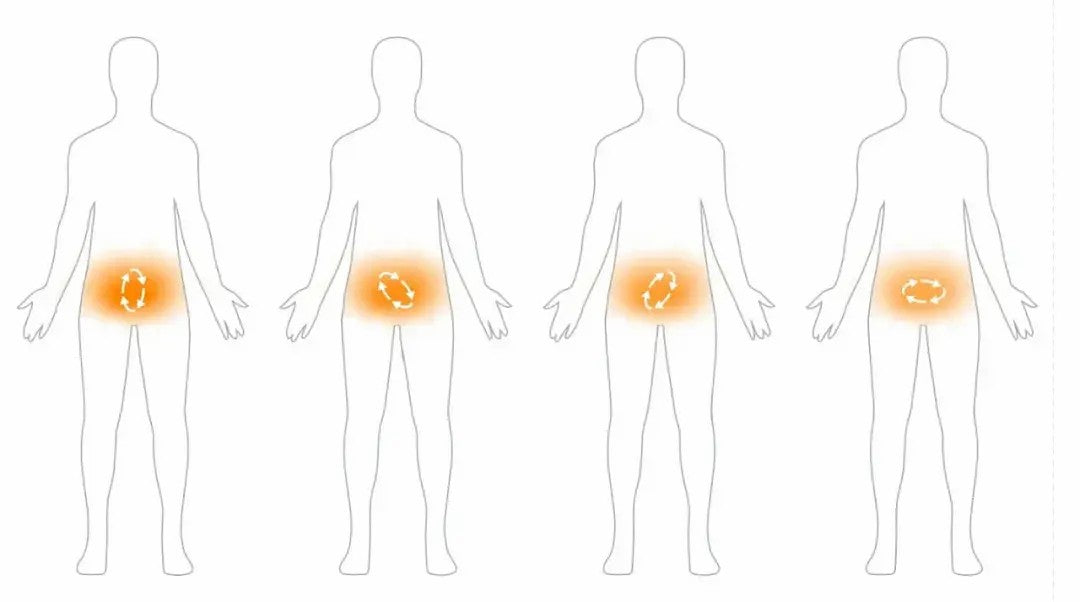
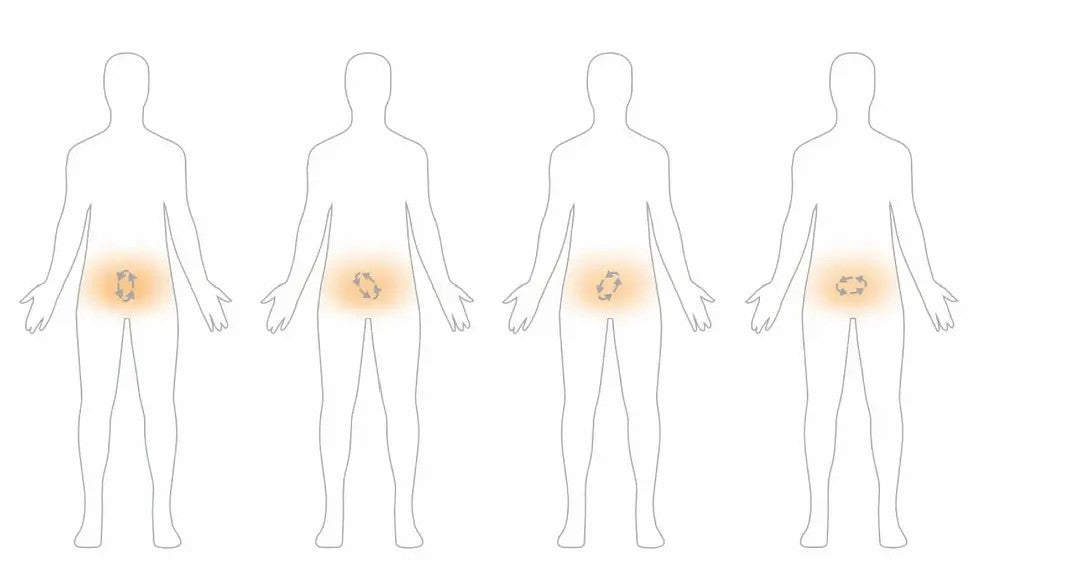
Pattern 02: Moving in a clockwise elliptical circle (image below): ① Top-bottom axis—this means that although the recipient's chakra is open, they sometimes tend to project their awareness into dreamlike dimensions and are prone to illusions in the real world; ② Left leg–right arm axis—this indicates that although the chakra is open, part of the recipient's mindset is passive and withdrawn, limiting function in this area; ③ Right leg–left arm axis—this indicates that although the chakra is open, the recipient's mindset is aggressive and forceful, limiting function in this area; ④ Left-right axis—this indicates that the recipient is positive and proactive most of the time, but still carries some negative mindset that creates obstacles for them.
Pattern 03: Rotating in a counterclockwise circle—this indicates that the recipient's mindset in this chakra area is negative, and they are projecting energy and mentality outward.
* Note: For women, during their menstrual period, every other chakra may also show counterclockwise rotation, so it's best to test outside of the menstrual period. This isn't limited to women—men also have a corresponding cycle, typically around once every 28 days, during which emotions and mental projection are stronger. You'll need to track this yourself.
![How to use the 7 Chakras Crystal Dowsing Pendulum 3]()
Pattern 04: Moving in a counterclockwise elliptical circle: ① Top-bottom axis—the recipient's mindset in this area is negative, and they are prone to negative illusions; ② Left leg–right arm axis—the recipient tends to give up easily on the functions associated with this chakra area, refusing to make changes to solve problems, and is likely to shift responsibility onto others; ③ Right leg–left arm axis—the recipient tends to respond rudely, refusing to address issues related to this chakra area, possibly saying things like "leave me alone" with irritation; ④ Left-right axis—the recipient's mindset in this area is negative most of the time, accompanied by a tendency to lie.
![How to use the 7 Chakras Crystal Dowsing Pendulum 4]()
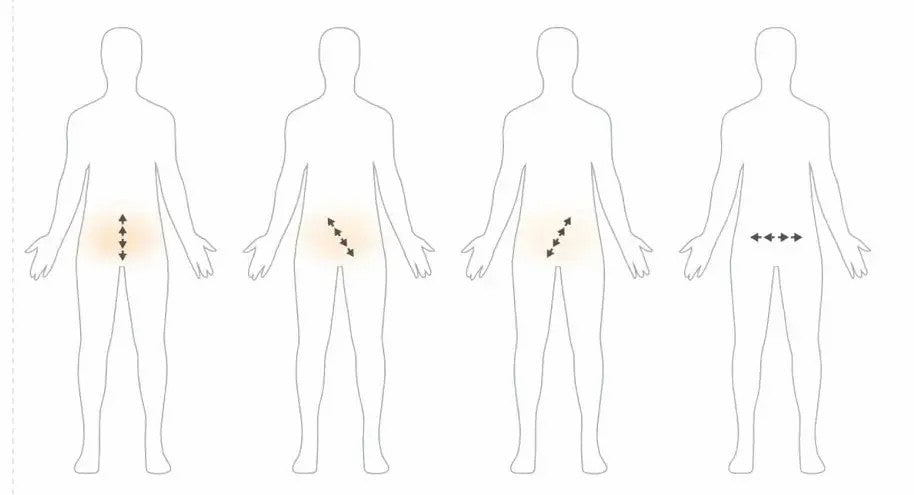
Pattern 05: Swinging in a straight line: ① Up-down swinging—this indicates that energy may be shifting upward; for example, the recipient may be unable to solve their current problems and has chosen "spiritual bypassing" to avoid real-world challenges; ② Left leg–right arm direction—the recipient has long felt denied or self-denying in this area, possibly holding a victim mentality and being prone to low moods; ③ Right leg–left arm direction—the recipient tends to be self-centered and inconsiderate of others' feelings; ④ Left-right swinging—this indicates that the recipient may be suppressing their emotions rather than choosing to express them.
![How to use the 7 Chakras Crystal Dowsing Pendulum 5]()
Pattern 07: Completely still—this indicates that the chakra has essentially stopped, with no energy flowing out or in. Additionally, the pendulum may drift to the left or right. The left side represents our feminine aspect, and the right side represents our masculine aspect. So if the pendulum drifts to the left, it means the person's thoughts and behavior patterns are passive and withdrawn; if it drifts to the right, it means their thoughts and behavior patterns tend toward being proactive and assertive.